Software Architecture
November 10, 2026
5 min read

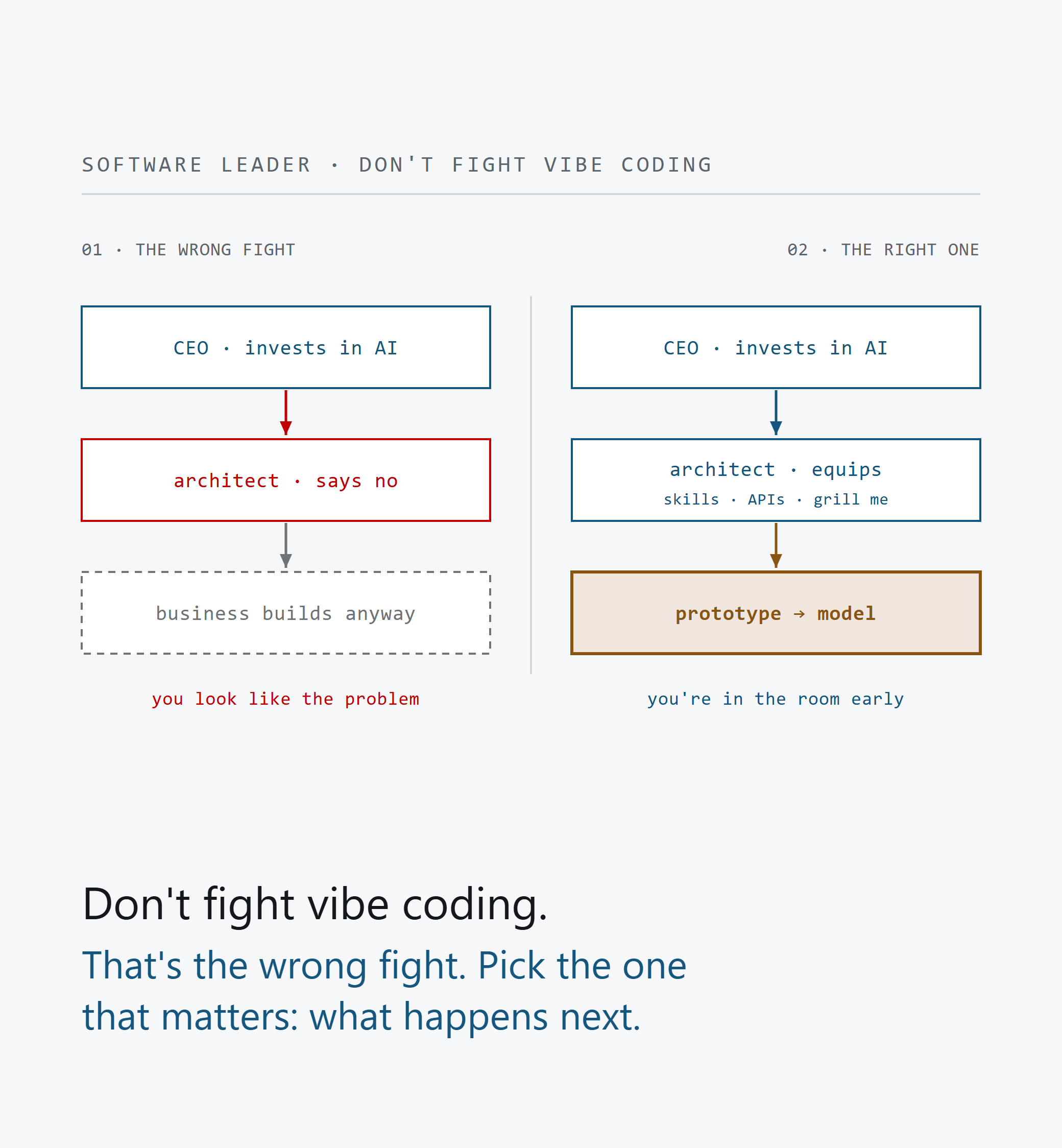

I keep having the same conversation. The CEO asks IT to invest in vibe coding, or simply hands the business Claude. And the architect pushes back: this needs proper design, the business can't do this.
The architect is right. It doesn't matter.
From the CEO's chair, the architect is a scarce and expensive resource, and now someone in the business has something running within days. It isn't the same result, but that won't show for months. So you are arguing about a cost that arrives later, against a result the CEO can click on today. The more you push back, the more you look like the problem the AI just solved.
Over the past year I've mentored architects and talked this through with many of them. My advice has ended up the same every time: when your CEO or CTO wants to invest in AI, don't fight it. That's the wrong fight. Pick the one that matters: what happens to what they build.
Getting requirements was always the hard part. The business thinks a few words are enough. It never is. We ran the workshops, wrote the analyses, and still got the real feedback only when people saw the finished software: the most expensive moment to find out you misunderstood each other.
A vibe-coded app turns that around. The business builds what it means, clicks through it, and finds out what is missing. More requirements come, and better ones, from the people who know. Why would you stop that?
But the worry is real. A CTO told me one of their people built software for clients and said the security was great. They had asked the AI. The danger isn't the code. It's the confidence.
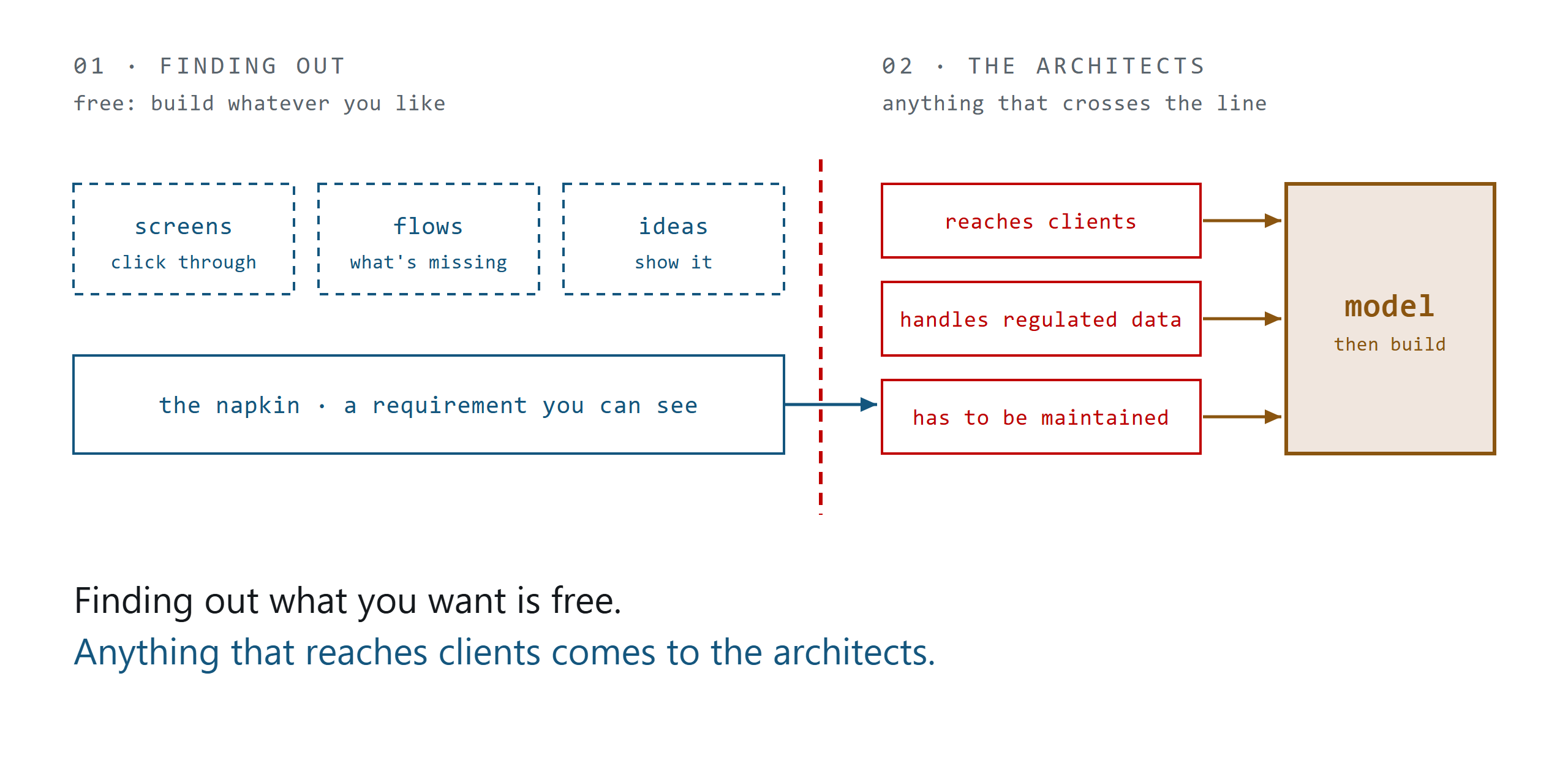
So draw the line. Finding out what you want is free: build whatever you like. Anything that reaches clients, handles regulated data or has to be maintained comes to the architects.
A house starts on a napkin too. Nobody calls the napkin a mistake, and nobody moves into it. The vibe-coded app is the napkin: the requirement, not the product.
A prototype shows the surface. Take one Approve button on a purchase request. Who may press it? What if two people press it at once? What starts in the back end: a budget reservation, a purchase order, a notification? And what if the finance system is down halfway?
The prototype shows a green rectangle and fakes everything behind it.
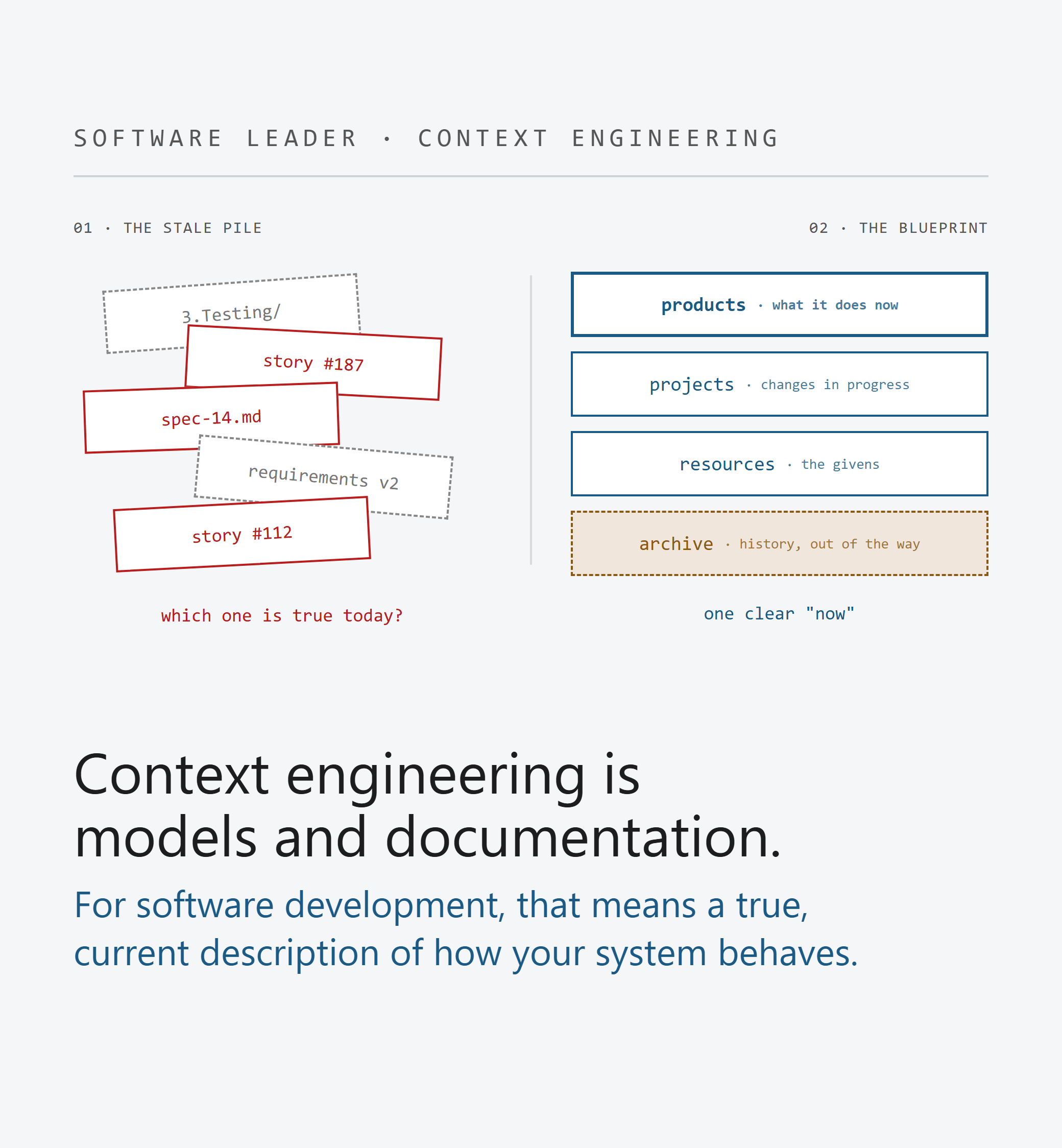
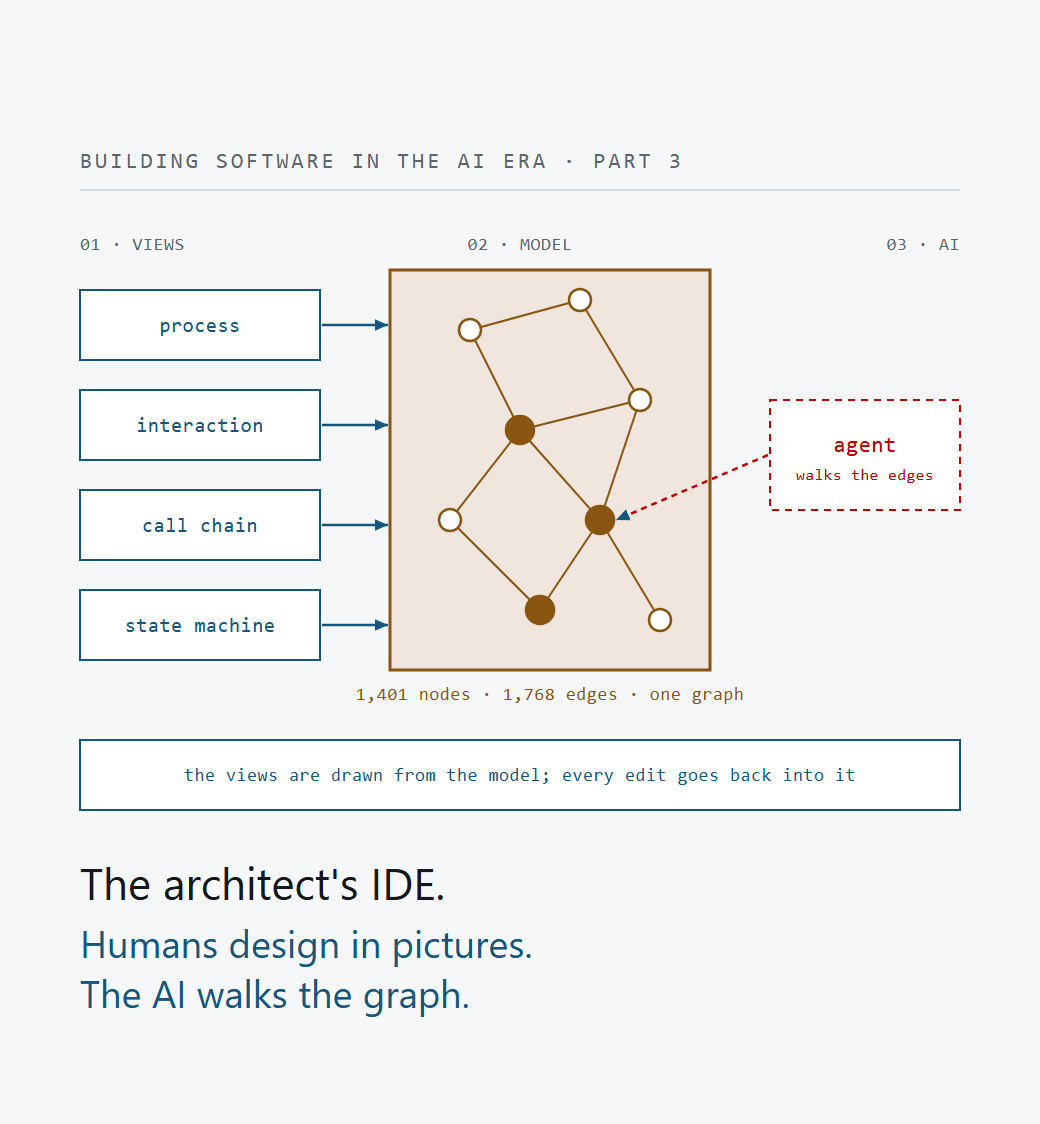
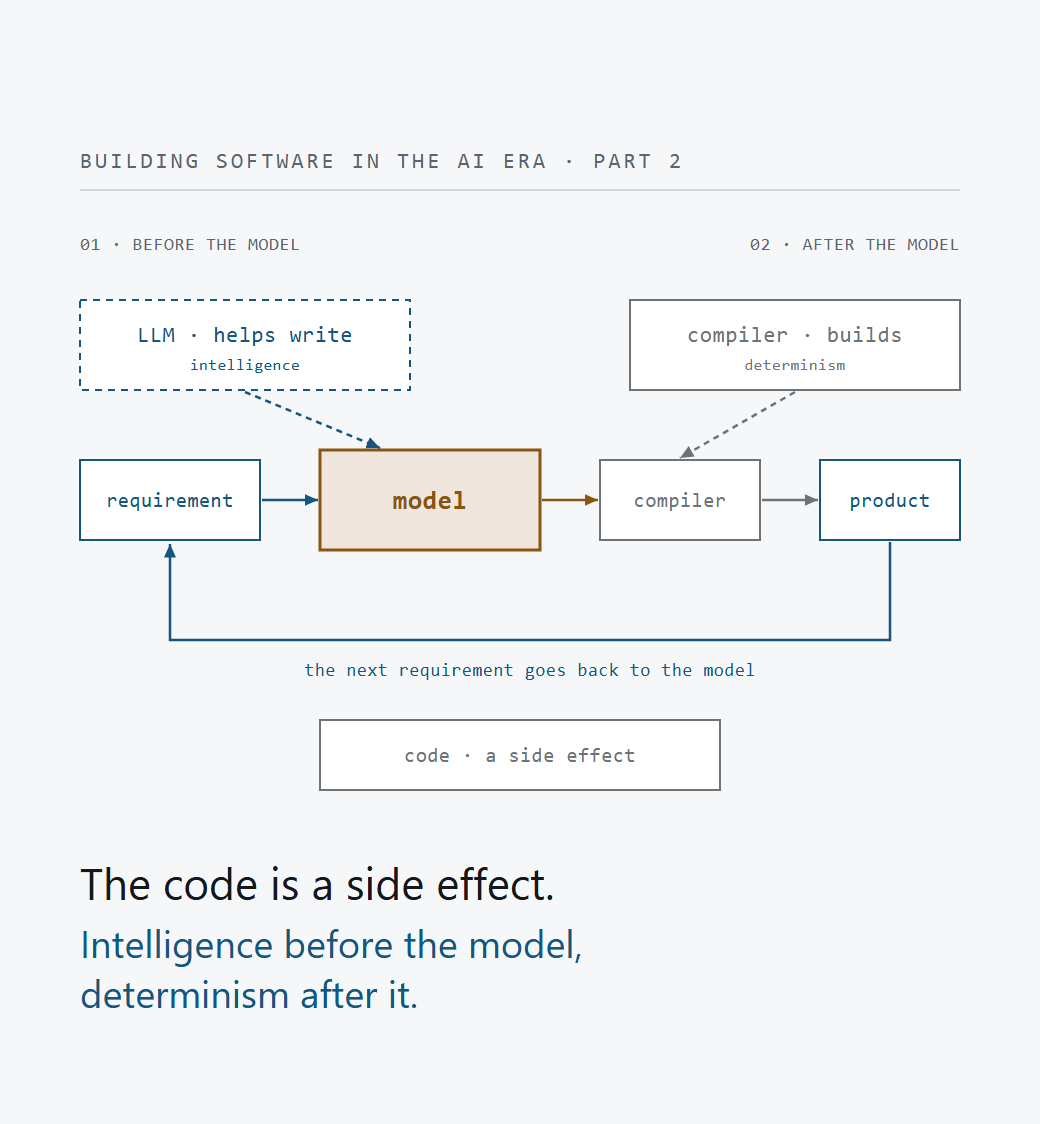
That is where we come in. Security, performance and maintainability are still ours. But first comes modelling the behaviour of the system: the states, the rules, the processes, the failures. Make it explicit and you can walk through it with the business, test it and build from it. Leave it implicit and it ends up scattered through code nobody understands.
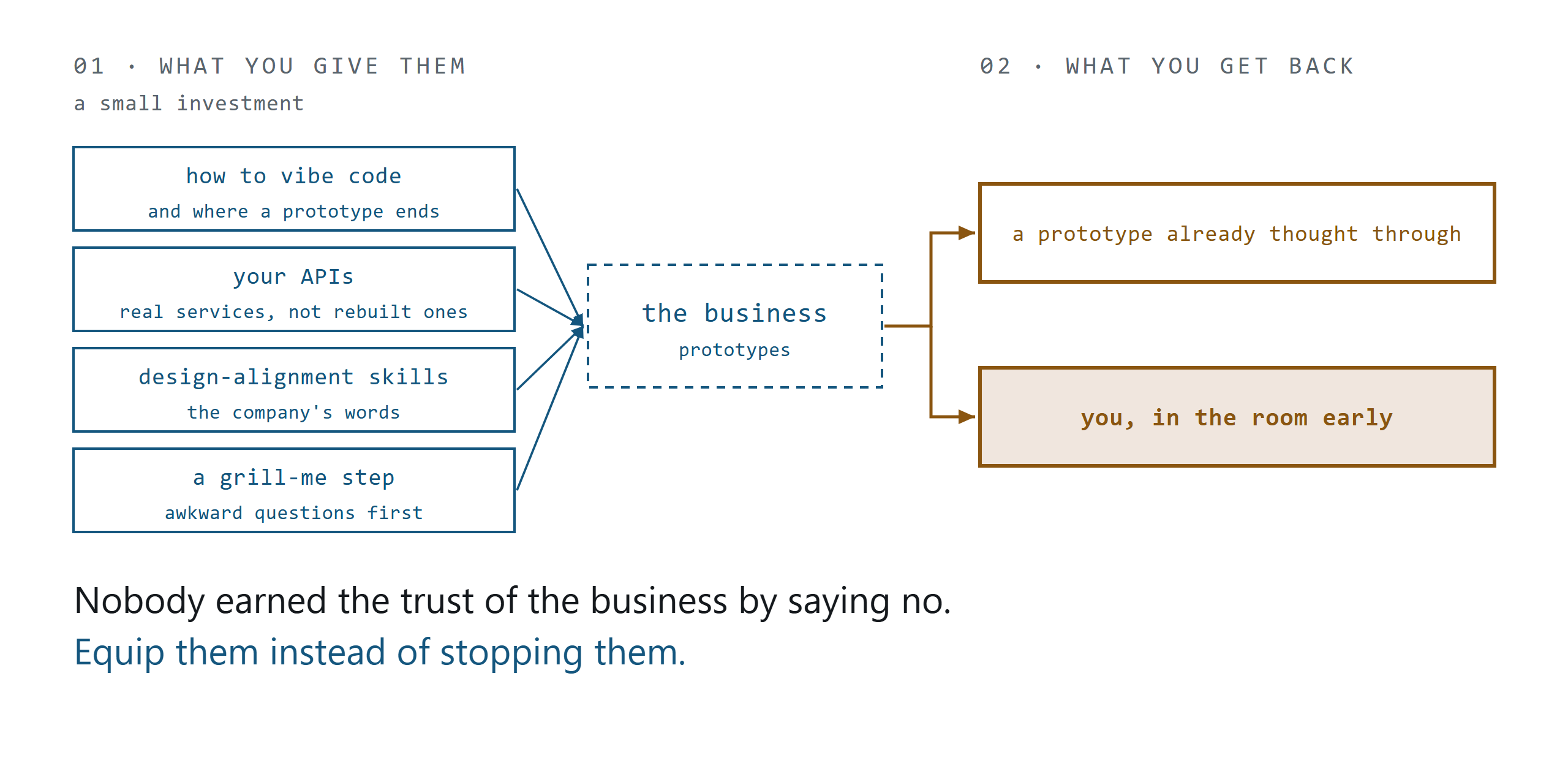
The business is going to do this anyway, so help them do it well. We gave people skills and an environment to work in. Start with:
You stop being the person who says no and become the person whose tools they use. You're in the conversation while the idea is forming, not handed a finished app and a deadline.
Technology will come back. Microservices promised to scale teams without limit, and left tightly coupled systems that are expensive to run. Now the same push is on to scale agents: Microsoft just reported nine engineers merging 1,211 pull requests in a day. It's an honest report with careful caveats, but the headline will reach your CEO before the caveats do. And user stories pushed into teams have become specs pushed into the LLM: more English, less deterministic code.
All of that will land on someone's desk who understands technology. That is still our job. It just isn't how we win the discussion today.
The business finds the requirements. We model the behaviour and make it real. That's the opportunity.
The risk is that the alternative is feasible: not cheap, not quick, but feasible. If we spend this time fighting our CEOs, we'll be out of the market before anyone admits we were right.
That is what we teach in the Master Builder Clinic: taking what the business has found out, and turning it into a model that the software can be built from.
So when the business shows up with a vibe-coded prototype, don't sigh. Say thank you. Then ask what happens when someone presses the button.